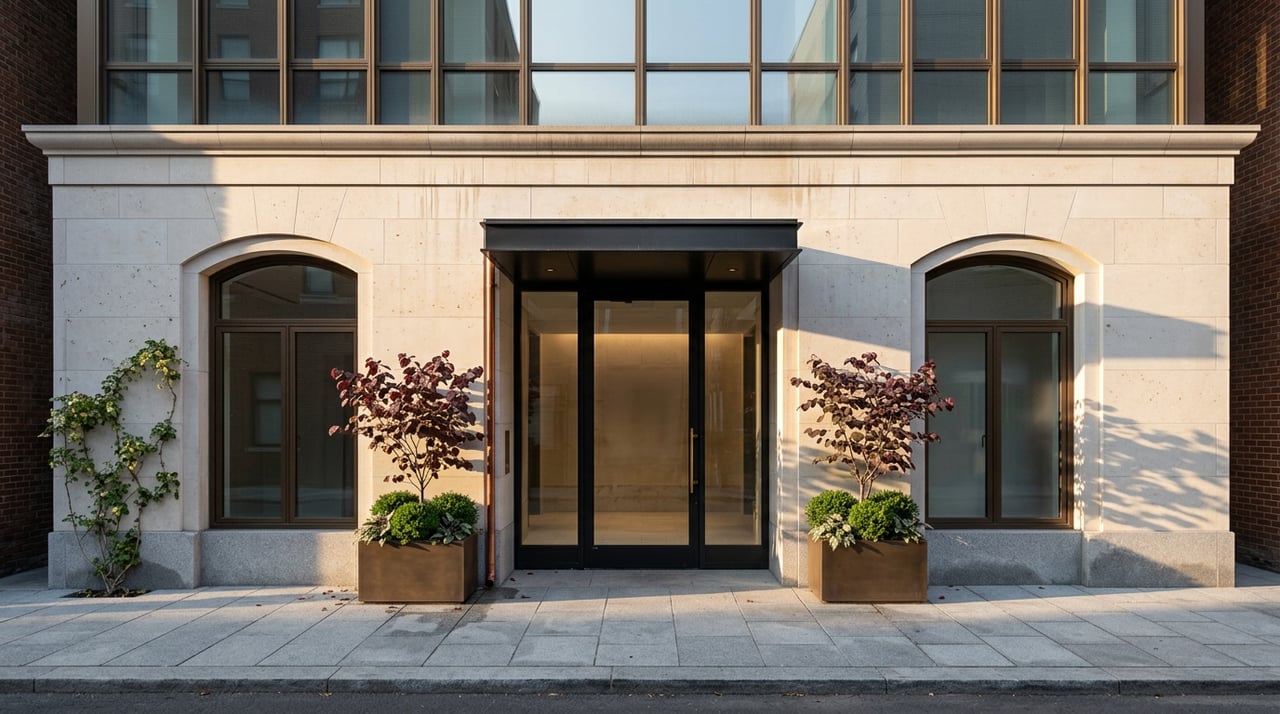
Two condominiums went up for sale within a few blocks of each other on Davenport Road earlier this year. Both sat in Yorkville's core luxury tier, above $2 million. One, at 88 Davenport Road, took 73 days to find a buyer before closing at $2.9 million. The other, at 181 Davenport Road, sold in 13 days at $2.082 million. Same street, same price bracket, same season. The gap wasn't the market. It was pricing.
That contrast is a useful place to start, because it turns out to be a small version of something much larger happening across Yorkville in 2026. While condo buyers have kept transacting, sometimes competing hard enough to push prices past asking, the neighbourhood's ground-related houses over $3 million have not sold at all. Not slowly. Not at a discount. Zero closings, for five straight months running through May.
If you've been comparing Yorkville to Rosedale or Forest Hill using a single average price pulled off a portal, that number is quietly averaging two markets that are behaving nothing alike.
The Freeze in Numbers
Yorkville's freehold segment, meaning detached and semi-detached houses and townhouses priced above $3 million, wasn't always this quiet. A year earlier, in June 2025, two premium freehold properties sold at an average of $3.92 million. That October, the segment had its strongest month of the year: six sales ranging from $3.315 million to $8 million, averaging $4.82 million, with the top sale on Hazelton Avenue closing at $8 million. That is a market with real depth and real buyers willing to compete for scarce inventory.
Then 2026 arrived, and the freehold line went flat.
| Period | Freehold ($3M+) sales | Average price | What it shows |
|---|---|---|---|
| June 2025 | 2 | $3.92M | Routine trading, modest volume |
| October 2025 | 6 | $4.82M | Strongest month of the year, up to $8M on Hazelton Ave |
| Jan through May 2026 | 0 | Not applicable | Five consecutive months without a single closing above $3M |
That is not a slow market. It is an absent one. Meanwhile, the luxury condo segment above $2 million kept posting transactions every single month, and by May it had its best performance of the year: seven sales averaging $3.40 million, with buyers achieving 99 percent of asking price on average. Three of those seven sales closed at or above list, including a unit at 1166 Bay Street that sold for 114 percent of its asking price.
Put plainly, in the same neighbourhood and the same months, condo sellers were completing sales while no freehold sales above $3 million closed.
Two Kinds of Pricing Problem
The Davenport Road comparison offers a clue to why this split exists, and it comes down to how easy or hard it is to prove what a property is actually worth.
A condo unit in a building like 88 Davenport or 181 Davenport has dozens of close comparables. Other units in the same tower, on similar floors, with similar layouts, have sold recently and those numbers are public. When a seller prices accurately against those comps, as happened at 181 Davenport, buyers can move fast because the risk of overpaying is low and easy to check. When a seller prices ambitiously, as happened at 88 Davenport, the unit still eventually finds its buyer, but only after weeks of the market testing that number against reality.
A $3 million-plus house on a street like Hazelton Avenue or in the interior blocks off Avenue Road has almost no true comparable. Every lot is a different size, every renovation is different, every heritage constraint is different. That makes pricing a judgment call rather than a calculation, and it gives sellers far more room to anchor to what a similar house sold for a year or two ago rather than what a buyer is actually willing to pay today. When enough sellers make that same judgment call at the same time, in a smaller pool of buyers who have more leverage to wait, you get exactly what Yorkville saw across the first five months of 2026: not lower prices, just no deals.
What's Still Moving, and Why
The condo side of the ledger tells the opposite story, and it is worth sitting with the specific numbers because they show competition returning in real time. Yorkville's $2 million-plus condo segment had been posting modest, steady volume through the first four months of 2026, two sales in March at a $2.49 million average, before May broke the pattern with seven transactions and that 99 percent price achievement figure. The 1166 Bay Street sale closing at 114 percent of asking is the kind of number that only shows up when more than one buyer wants the same unit badly enough to bid past the seller's own number.
That is a fundamentally different psychology than the freehold freeze. Condo buyers in this tier are shopping a market with visible, recent, apples-to-apples data. When a well-positioned unit hits the market, they can move on it with confidence, because the comparable sale from two months ago is right there to check against.
The Building That Shows What Buyers Are Paying For
If you want to see what commands a premium at the very top of Yorkville's condo market, 36 Hazelton Avenue is a useful case study. Built in 2014 by Alterra Group and Zinc Developments, and designed by Quadrangle Architects, the seven-storey building was constructed around the preserved 1928 façade of the former St. Basil's Catholic School, so the entry sequence reads as heritage stone before it opens into a contemporary lobby. Units range from a compact 1,073 square feet up to a 4,600 square foot penthouse, offering a range of sizes under the same roof.
That range matters when you consider where Yorkville's true trophy pricing lives. Units in the neighbourhood's most recognized buildings, among them Four Seasons Private Residences, The Hazelton, and 50 Yorkville, routinely transact above $3,000 per square foot, with penthouse product exceeding $5,000 per square foot. That is the ceiling the rest of the condo market is priced against, and it is a large part of why a $3.40 million average sale price in May 2026 didn't require an unusual number of transactions to register as the strongest month of the year. In Yorkville's condo tier, a handful of the right sales at the right addresses moves the whole picture.
What a Maintenance Fee Is Actually Telling You
Buying into that tier means budgeting for more than the purchase price, and maintenance fees are where a lot of buyers get surprised. As a general rule of thumb from Property.ca's business development team, fees in the 75 to 85 cent per square foot range are typical and reasonable. Anything north of a dollar per square foot suggests either a heavily amenitized building or one worth asking harder questions about, while fees that sit unusually low for an older building can be a warning sign of an underfunded reserve rather than a bargain.
The stakes of getting this wrong are not abstract. The Globe and Mail once profiled a 30-year-old boutique Yorkville building where a spacious two-bedroom unit carried a $1,809 monthly maintenance bill. The size was genuinely appealing, nearly 1,400 square feet, but the fee kept buyers away long enough that the sellers dropped their price from $950,000 to $899,000 before finally accepting $879,000. Once the price adjusted to reflect what that fee was actually costing a buyer over time, showings jumped noticeably and the unit sold within weeks. The lesson holds in any building: a fee is not a red flag on its own, but it has to be priced into the number a buyer is willing to pay, and sellers who ignore that math end up doing the price cut anyway, just later and more publicly.
What This Means If You're Weighing Yorkville Against Somewhere Else
If you're comparing Yorkville to Rosedale, Forest Hill, or Moore Park while deciding where to buy or list, the single most useful thing to take from this year's data is that "Yorkville prices" isn't one answer. It depends entirely on which asset you're pricing.
If you're selling a house above $3 million, the five-month freeze doesn't mean your home is worth less. It means the pool of buyers willing to transact at 2025 price expectations has shrunk, and closing a deal now requires either patience or a pricing conversation that reflects where actual buyer behaviour sits today rather than where the last comparable closed. The flip side is real too: five months of zero transactions is also five months of pent-up demand with nowhere to go, and the seller who moves first when that demand resurfaces has a real shot at capturing a scarcity premium before a wave of relisted competition arrives behind them.
If you're buying or selling a condo in the $2 million-plus tier, you're in a market that is currently rewarding precision. The Davenport Road comparison says it plainly: price to the comparable sale and you can close in under two weeks, price above it and you can still get there, but only after the market has had its say for two months or more.
A Few Questions We Hear
Does the freehold freeze mean Yorkville houses are losing value? There's no evidence of that in the data. What's frozen is transaction volume, not price. Zero sales above $3 million for five months means very few sellers and buyers have agreed on a number, not that the number has fallen.
Should I wait for freehold prices to drop before buying a house in Yorkville? The data doesn't point clearly in that direction. A prolonged freeze tends to build up buyer demand that has nowhere to go, which historically favors sellers who reposition first once activity resumes rather than buyers who wait for a discount that may not materialize.
How do I know if a specific building's maintenance fee is reasonable? Divide the monthly fee by the unit's square footage. A result in the 75 to 85 cent range is typical for Toronto's luxury segment. Higher numbers aren't automatically bad, especially in full-amenity buildings, but they need to be weighed against what services and reserve fund health they're actually buying.
Numbers like these change month to month, and the contrast between a condo selling in 13 days and the lack of freehold sales above $3 million for five months makes a conversation about pricing worth having before it's too late. If you're trying to figure out which side of Yorkville's market your property or your search actually falls into, Revered Residences is glad to walk through what the current data means for your specific situation. Let's Connect.
This article is general information, not legal, tax or financial advice. Consult a qualified professional about your situation.