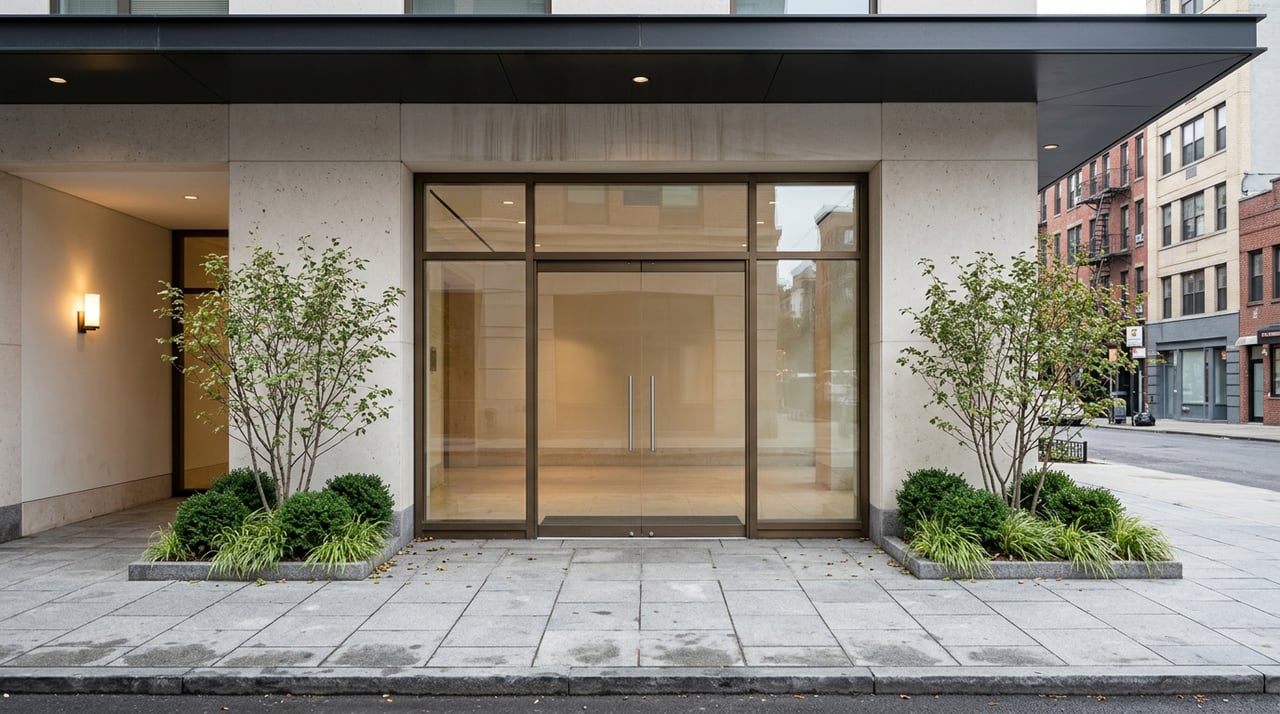
Stand at the northeast corner of Eglinton Avenue West and Bathurst Street on a Tuesday morning and you will see commuters disappear underground every few minutes, tapping through fare gates into a station that did not exist six months ago. Walk south to Spadina Road and Lonsdale Avenue and you will find the same bakery line, the same coffee order, the same unhurried Saturday pace that has defined Forest Hill Village for decades. Both of those things are true at once, and the gap between them is the actual story of what the Eglinton Crosstown has done to this neighbourhood since it opened.
Line 5 Eglinton began carrying passengers on February 8, 2026, part of a phased rollout that gave Forest Hill its own station for the first time. Six months in, enough has settled into a routine that it is possible to say plainly what changed and what did not, rather than repeat the launch-day talking points.
What Actually Opened At Bathurst And Eglinton
Forest Hill station sits underground at the intersection of Eglinton Avenue West and Bathurst Street. The main entrance is at the northeast corner and is fully accessible, with a second entrance about 50 metres west on the north side of Eglinton, opposite Peveril Hill, built with retail space at street level. The name itself took years to settle. Planners called it Bathurst station through most of construction, then had to rename it because the Bloor-Danforth line already claimed that name back in 1966. A community consultation in 2015 landed on Forest Hill instead.
The corner has already pulled in new construction. A mid-rise condominium building rose on the southwest corner of Eglinton and Bathurst with a direct underground link into the station lobby, the kind of connection that only makes sense once the station itself is real. That is the visible, tangible change: a new intersection identity built around transit that simply did not exist before.
The Awkward Transfer This Was Supposed To Fix
Before February, the closest rapid transit to Forest Hill was Line 1 at St. Clair West and at Eglinton West, now called Cedarvale. Getting across the neighbourhood by subway meant walking a few hundred metres from the St. Clair West platform past the Loblaws at Bathurst to reach the bus stop, a transfer locals have long considered one of the least convenient in the city. It worked, but it was never fast, and it was never the kind of connection you would plan an errand around.
Forest Hill station replaces that walk with a direct line for anyone heading east or west along Eglinton. The trip that used to require a subway ride south and a bus transfer now happens on one train, which is the specific, practical fix the neighbourhood had been missing rather than a general transit upgrade for its own sake.
The Numbers Six Months In
The TTC advertises an end-to-end Mount Dennis to Kennedy run of 52 to 54 minutes on Line 5. That figure describes a train moving at full speed with no delay, and it is worth checking against what riders are actually experiencing.
| Day | Service hours | Frequency |
|---|---|---|
| Weekdays | 5:30 a.m. to 1:20 a.m. | Every 4 minutes at peak (7 to 10 a.m., 3 to 7 p.m.); every 6 to 9 minutes off-peak |
| Saturdays | 5:30 a.m. to 12:30 a.m. | Every 7 to 8 minutes |
| Sundays and holidays | 7:30 a.m. to 1:20 a.m. | Every 6 to 9 minutes |
The existing 34 Eglinton bus still runs every 20 minutes on the surface for anyone who would rather stay above ground, a familiar option that never went away.
A July 2026 ridership report from TTC CEO Mandeep Lali, reported by TorontoToday, showed the average afternoon rush-hour round trip on Line 5 falling from 118 minutes on opening day to roughly 101 minutes by summer. That is real progress, but the same report flagged the underlying data as still volatile, a contrast to the Finch West LRT, where round trips have settled into a tight, predictable band around 80 to 85 minutes since April. In plain terms, Line 5 is getting faster on average, but a given ride can still run well past what the schedule promises, and Forest Hill riders have had six months to learn which departures to trust and which to pad for.
Where The Bike Lanes Stop
One piece of the Crosstown story that has not reached Forest Hill yet is the cycling infrastructure. The City's eglintonTOday Complete Street project was meant to add bikeways and sidewalk upgrades along the full corridor once construction wrapped. In practice, working with the Eglinton Way BIA, the city completed one new segment between Chaplin Crescent and Avenue Road in fall 2024, connecting into about 1.5 kilometres of continuous cycling infrastructure that runs east toward Yonge Street.
That segment sits east of Forest Hill's own stretch of Eglinton at Bathurst. According to the city's own project page, changes to the provincial Highway Traffic Act have now made it impossible to complete the rest of the plan as originally envisioned. For a resident on a bike at Bathurst and Eglinton, that means the protected lanes that exist a short ride east do not yet extend to the corner where the neighbourhood's own station sits, and the city's current position suggests they may not arrive on the original timeline. The station opened. The street around it is still catching up.
Down At Spadina And Lonsdale, Not Much Changed At All
Forest Hill Village, the walkable stretch at Spadina and Lonsdale, sits well south of Eglinton itself, and that distance mattered during construction. The disruption that drained foot traffic along Eglinton for fifteen years played out on the avenue and at the Bathurst intersection, not down at the Village's own corner. Businesses there kept their regular flow of customers while the station box to the north went through years of staging and fencing.
The result is a Village that reads today almost exactly as it did before the line opened. What A Bagel and Aroma Espresso Bar remain the everyday regulars locals still stop into for a morning coffee or a bagel rather than a night out. Cedarvale Ravine and the Beltline Trail are still a short walk away, unaffected by anything happening underground at Bathurst, and still the better option for anyone who would rather walk than ride. The neighbourhood's identity, the tree canopy, the private schools, the slow pace of the Village core, has not moved an inch because of a train running underground to the north.
Two Neighbourhoods, One Name
What the Crosstown actually did was change the north edge of Forest Hill, the Bathurst and Eglinton corner, and leave the rest of the neighbourhood largely as it was. That is a more useful way to think about it than a blanket claim that transit arrived and everything shifted. If your daily pattern runs through that corner, your options for getting east or west genuinely improved, even with the reliability caveats above. If your daily pattern runs through the Village or the ravine, six months of a new LRT line have changed very little about how your morning actually feels.
Both readings are accurate. Knowing which one applies to a given block is the kind of detail that only comes from paying attention to this neighbourhood specifically, not from a general note about Toronto transit.
If you are weighing what any of this means for a property in Forest Hill, or simply want a second opinion grounded in the neighbourhood rather than a headline, Revered Residences is glad to talk it through. Let's Connect.