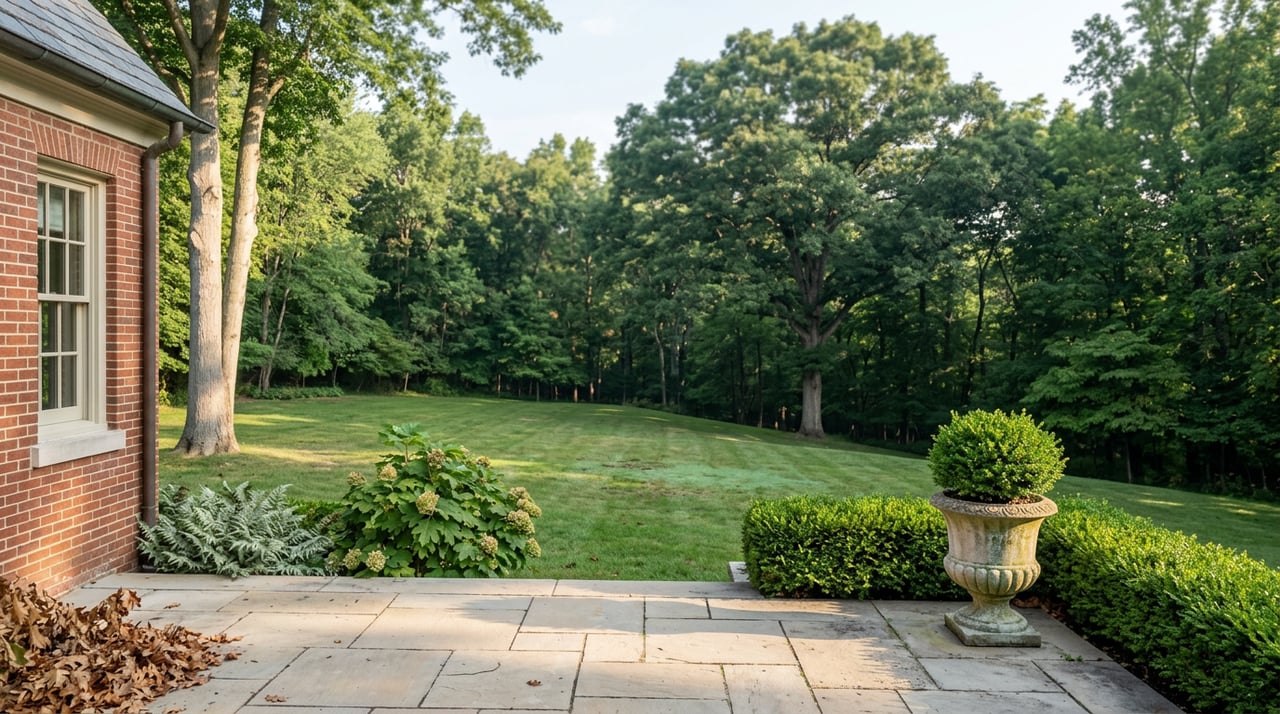
Ask a Rosedale homeowner what their ravine view is worth and they'll usually cite a number from a recent sale down the street. Ask what happens if a city inspector measures the stump of a tree that came down without a permit, and the answer is worth knowing. Since the City of Toronto's amendments took effect on September 1, 2026, that second question is easier for the city to answer, and a lot more expensive to get wrong.
The change is a set of amendments to Toronto's tree bylaws, the Private Tree Bylaw and the Ravine and Natural Feature Protection Bylaw, known formally as Municipal Code Chapter 658. Both apply with particular force in Rosedale, where North Rosedale, the Vale of Avoca, and the Rosedale Valley ravine system have long put a large share of the neighbourhood's mature trees inside a protected zone. City Council approved the update earlier this year, and the effective date was September 1, 2026. For anyone weighing a listing on a ravine lot this fall or next spring, the timing matters more than the fine print suggests.
What Actually Changes
Toronto's director of urban forestry, Kim Statham, told CBC News on August 23 that the bylaws are "a critical piece" of the city's push to raise tree canopy to 40 percent by 2050. The mechanics behind that goal, as they apply to private property, are:
- A new Distinctive Tree category for healthy private trees with a trunk 61 centimetres or more in diameter. These trees now get special consideration during permit review, whether or not they sit inside a ravine boundary.
- The first-ever ravine permit application fee. Roughly 30,000 Toronto households sit inside a ravine-protected area, and since September 1, 2026, applying to remove or injure a tree, or alter grade, in one of those zones costs between $87 and $632 depending on the activity. Previously the application itself was free.
- Stump measurement as evidence. If a tree disappears before an inspector arrives, city staff can now measure the remaining stump and use that diameter to establish that a protected tree was removed without authorization.
- Quarterly public reporting. Permit outcomes and contravention findings will now be published on the city's Open Data Portal on a regular schedule, rather than surfacing only through a records request.
- Protection for replacement trees. Any tree planted as a condition of a permit is now protected from the moment it goes in the ground, regardless of size.
None of this is exotic policy. It is enforcement catching up to a rule that already existed. The Ravine and Natural Feature Protection Bylaw has for years covered trees inside a designated ravine area. What changes is how visible a violation becomes, and how much it costs to do things properly even when you have no intention of doing anything wrong.
The Part That Actually Affects a Sale
Here is the mechanism worth sitting with. A ravine lot in Rosedale routinely commands a premium of $2 million or more over a comparable interior lot. That premium is priced almost entirely on the landscape, mature canopy, privacy, the sense of a private park behind a formal Georgian or Edwardian facade. It has never been priced on paperwork.
Quarterly public reporting changes that. Once contravention outcomes live on an open data portal rather than in a filing cabinet, a buyer's real estate lawyer doing routine due diligence has another way to check a property's tree history.
That is the shift. Tree-related costs may surface before the deal closes. For a $2 million premium, that is not a rounding error. It can affect a buyer's confidence in what they are paying for and prompt a conversation about a price chip during the conditional period.
Planning for the Permit Timeline
Permit timing is another consideration, even when everything is in order. LandCon says a ravine permit application generally requires a current property survey showing top-of-bank, an arborist report on the trees affected, and in some cases a geotechnical assessment of slope stability, all submitted to Urban Forestry and, where the Toronto and Region Conservation Authority has jurisdiction, to the TRCA as well. Industry guidance on ravine landscaping projects puts the typical review window at three to six months, which is why the standard advice is to start planning ravine work in winter if you want it resolved before a spring listing.
If a seller wants a dead or hazardous tree addressed, a sightline opened, or a deck rebuilt near the ravine edge before photography, that clock starts now, not after an agreement is signed. Waiting until an offer is on the table to discover that a tree needs a permit, a fee, and a multi-month review is how a closing date slips.
What This Means If You're Weighing a Listing
None of this argues against a ravine lot. North Rosedale carries the highest tree canopy in the city outside High Park, and that canopy, sitting above the Vale of Avoca, the Park Drive lands, and the Moore Park Ravine that feeds into the Lower Don Valley, is exactly what a ravine premium is paying for. The argument is about sequencing.
Before a ravine property goes to market, it is worth knowing, in writing, whether any tree work has occurred on the lot in recent years, whether it was permitted, and whether the property's boundary intersects the city's mapped protection zone at all. The city's online mapping tool will confirm that in minutes. An arborist familiar with Chapter 658 can confirm the rest, and can flag early whether any tree on the lot now qualifies as Distinctive under the new 61-centimetre threshold, since that status will factor into how a permit application gets reviewed going forward.
A seller who has this documentation ready hands a buyer's lawyer a clean file instead of a question mark. That is worth more than the modest cost of an arborist report and a permit fee that, even at the top end, runs a few hundred dollars against a premium measured in millions.
The North Rosedale Residents' Association has tracked this closely for years, noting that the neighbourhood's ravine lands, bounded by the Lake Iroquois Shoreline to the north, are the signature feature of the area and the reason its streets look the way they do.
A Few Questions Sellers Ask
Does this apply to trees that aren't near the ravine edge at all? Yes, if the property's mapped boundary falls inside the city's designated ravine protection zone. That boundary can extend one or two lots back from the visible slope, so a tree in a front yard can still fall under Chapter 658 even if it looks nowhere near a ravine.
Do the new fees apply to permits already in progress? The city said the fee structure and other amendments took effect on September 1, 2026. Anyone with an application already underway should confirm timing directly with Urban Forestry, since transition rules for in-progress files are a detail worth verifying before assuming either way.
Is a dead tree exempt from all of this? No. A dead tree 30 centimetres in diameter or larger, Toronto Tree Services says, is still protected and ordinarily requires a permit before removal, though Tree Service Toronto says the city allows emergency removal of a genuine hazard with post-removal notification. Waiting for a permit on a tree that poses an active risk is not the intended outcome of the bylaw, but the paperwork still has to follow.
Rosedale's ravine lots have always asked more of a seller than a typical listing. The trees that make the premium real also make the file more complicated, and since September 1, 2026, more of that complication is visible to buyers and their lawyers. Getting the documentation right before the sign goes up is a smaller job than fixing it during a conditional period.
If you're weighing the timing on a ravine property in Rosedale, or want a second opinion on what a buyer's lawyer is likely to ask, Revered Residences is a good place to start that conversation. Let's Connect.
This article is general information, not legal, tax or financial advice. Consult a qualified professional about your situation.